
【Repost】"Next-Gen Healthcare Platform Project" by the MOHW's Department of Information Management
1. The foundation of precision medicine and smart healthcare lies in a unified Hospital Information System (HIS). Only by integrating data from various medical centers can Taiwan create a high-quality, national-level medical big data repository for use in biotech and AI research and development. Currently, hospitals in Taiwan develop their electronic medical record (EMR) systems independently, leading to inconsistent data formats that fail to meet the needs of smart healthcare advancement. To address this issue and lay the groundwork for the country's long-term development, this project proposes a comprehensive strategy for a next-generation digital healthcare platform. This initiative aims to align Taiwan's HIS with international standards and achieve three primary goals: data standardization, unified regulations, and application integration.
2. To achieve the three unification goals, the following specific actions will be implemented:
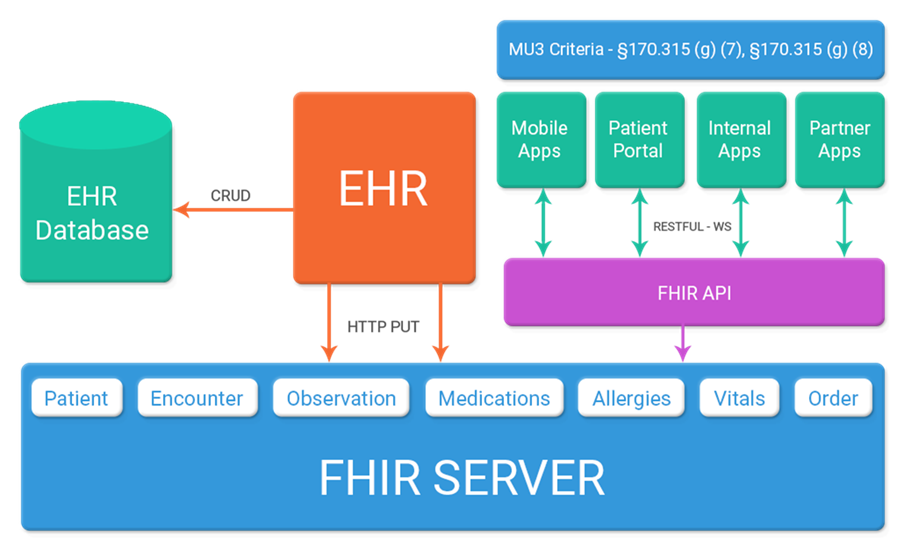
(1) Adopt the international medical data standard FHIR to standardize the format of Taiwan's electronic medical record (EMR) data.
(2) Utilize Clinical Quality Language (CQL) to establish a Rule Library, standardizing healthcare insurance claims and medical quality regulations to enhance both healthcare quality and administrative efficiency.
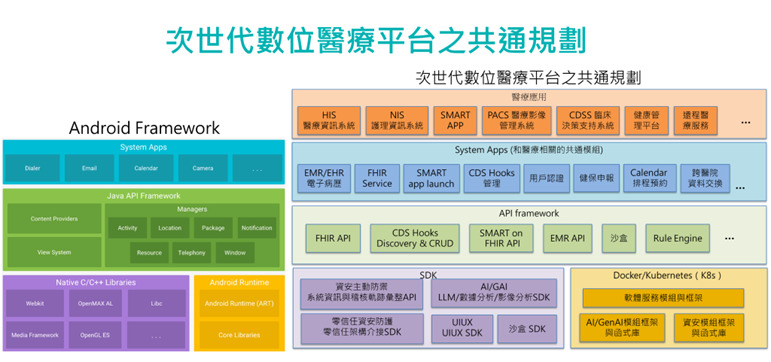
(3) Introduce the international SMART on FHIR application standard, which provides a framework for HIS and mobile healthcare application development. This will unify smart healthcare applications, create an app marketplace, and promote the growth of a smart healthcare ecosystem.
3. The initial scope of this project focused on updating the information systems of government-operated hospitals, with four hospitals selected as pilot sites. To accelerate progress toward the overarching national digital healthcare objectives, the project will shift its focus to encompass all hospitals nationwide, adopting a differentiated implementation strategy based on the three-tier healthcare system.
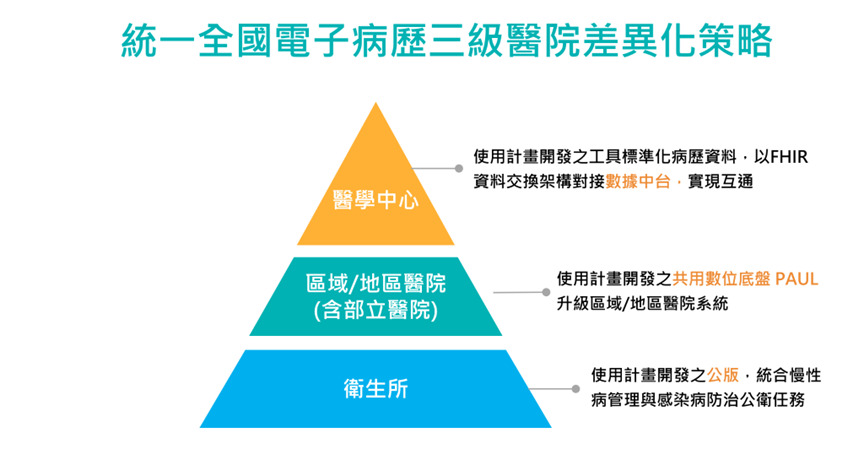
(1) Medical Centers: Medical centers already have comprehensive HIS systems, so the interoperability strategy focuses on data translation and exchange through a middleware platform rather than a complete overhaul of HIS systems. The project involves developing tools to first convert the electronic medical record content of medical centers based on the three major data standards, LOINC, SNOMED CT, and RxNorm. The converted data will then be uploaded to the FHIR data server and exchanged through the National EMR Data Middleware Platform. The data exchange will be centered on TWCDI (Taiwan Core Data Element for Interoperability), achieving the goal of seamless interoperability across systems.
(2) Regional/District Hospitals: HIS systems at this level are relatively outdated. A phased overhaul will be implemented. Given that small-to-medium-sized Taiwanese healthcare IT companies cannot independently develop next-generation EMR systems that comply with international standards, the project will adopt an Android-like architecture. Under the leadership of the Department of Information Technology, the Industrial Technology Research Institute (ITRI) and partnering vendors will jointly develop a Taiwan HIS Digital Chassis PAUL (Platform Advancing Unified Healthcare). PAUL will help small-to-medium IT vendors upgrade existing systems to next-generation EMR systems while maintaining flexibility for hospital-specific customizations.
(3) Community Health Centers: Community health centers face similar challenges, including outdated systems, overlapping functionalities, interoperability issues, and cybersecurity vulnerabilities. These centers play a crucial role in managing chronic diseases and controlling infectious diseases. The new system must support the digitization and automation of public health tasks while ensuring seamless data integration with central authorities or medical centers. The Department of Information Technology will lead ITRI and vendors to develop a standardized EMR platform for community health centers, addressing the digital divide and modernizing their systems comprehensively.
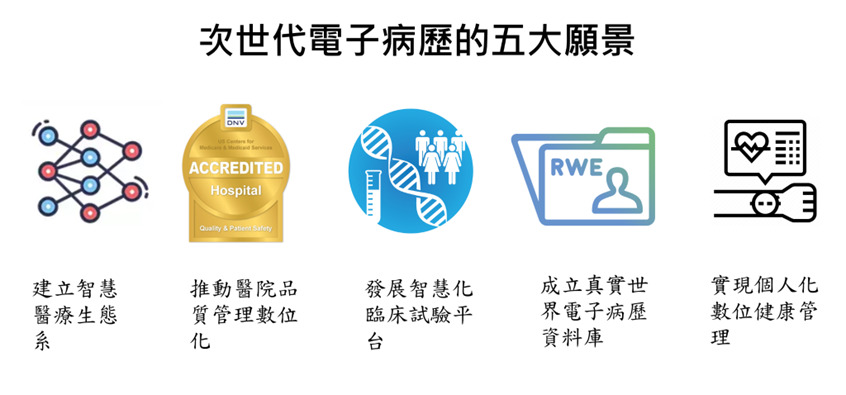
4. Given that the application context was unclear during the previous push for HIS integration, resulting in slow progress and low hospital cooperation, this project will promote five key visions on the unified platform to drive hospital system updates.
The Five Key Visions:
-
Establishing a Healthcare AI Ecosystem
-
Digitizing Hospital Quality Management
-
Developing a Smart Clinical Trial Platform
-
Building a Real-World EMR Database
-
Achieving Personalized Digital Health Management
5. The specific tasks to achieve the five key visions are as follows:
(1) Establishing a Healthcare AI Ecosystem: Three types of AI centers will be established, including the Responsible AI Implementation Center (10 centers), AI Forensics and Verification Center (5 centers), and AI Impact Research Center (4 centers). This project was announced on July 23 and a nationwide training session was held. The deadline for submissions was August 1, with a strong response from hospitals at all levels. A total of 30 hospitals submitted 48 proposals, and the review results are expected to be announced in September.
(2) Digitizing Hospital Quality Management: In the past, the data used by hospitals for medical quality indicators in evaluations were not standardized. Based on FHIR, this project will promote the establishment of the TWQI (TW Quality Improvement) Core to standardize Taiwan’s medical quality data format. It will also encourage the use of CQL (Clinical Quality Language) technology to embed relevant quality indicator definitions into HIS systems, enabling the automatic generation of quality indicator reports. This will facilitate the standardization and interoperability of medical quality indicators across Taiwan’s medical centers. Additionally, CDS (Clinical Decision Support) hook technology will be utilized to guide clinicians in making evidence-based decisions, improving healthcare quality.
(3) Developing a Smart Clinical Trial Platform: Create a clinical trial platform based on FHIR data, enabling cross-system searches for patients meeting trial criteria and automating the generation of case report forms (CRF). Incorporate GenAI technology to automatically extract data and employ Digital Twin technology to building simulate clinical trial datasets.
(4) Building a Real-World EMR Database: Using TW Core as the foundation, a multi-center real-world database will be established. The content of TW Core primarily focuses on clinical services, but it still has limitations in medical research. This project will expand TW Core into TW Core Plus, integrating Taiwan's current biobank and large health data platforms to construct a national-level medical research database. This will create a national-level database structure similar to the U.S. All of Us Research Program, which will help facilitate the future establishment of a biomedical super database in Taiwan.
(5) Achieving Personalized Digital Health Management: Introduce FHIR standards to create a unified national data standard for home healthcare and personal health management. Promote the development of an ecosystem for personalized health platforms.
Examining the current state of international development, apart from the United States, other major industrial nations have yet to implement such a comprehensive and detailed Digital Health Infrastructure plan. If successfully implemented, this project will position Taiwan as a global leader in the development of Digital Health.
Source: MOHW Blog https://blog.mohw.gov.tw/459/